

Hey there! As a tourniquet supplier, I often get asked all sorts of questions about our products. One question that popped up recently really got me thinking: Can a tourniquet be used on a prosthetic limb? Let's dive into this topic and see what we can find out.
First off, let's understand what a prosthetic limb is. A prosthetic limb is an artificial device that replaces a missing body part, usually an arm or a leg. These devices are designed to restore some level of function and mobility to the user. They come in different types, from basic models to high - tech ones with advanced features.
Now, a tourniquet is a device used to stop severe bleeding by applying pressure to a limb. It's a crucial tool in emergency situations, whether it's in a battlefield, a car accident, or a medical setting. We offer a variety of tourniquets like the Disposable Medical Tourniquet For Medical Use, Disposable Medical Non - woven Tourniquet, and Disposable Elastic Soft Orthopedic Emergency Tourniquet Buckle.
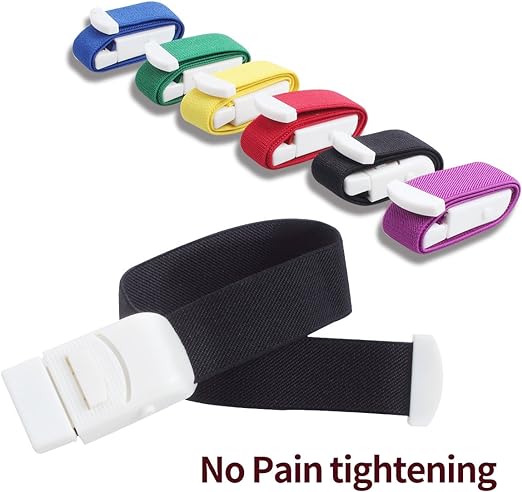

So, back to the question. Can you use a tourniquet on a prosthetic limb? Well, the short answer is no, and here's why.
A prosthetic limb doesn't have blood vessels like a natural limb. The main purpose of a tourniquet is to compress blood vessels to stop blood flow. Since there are no blood vessels in a prosthetic limb, using a tourniquet won't achieve its intended goal of stopping bleeding.
Another reason is that applying a tourniquet to a prosthetic limb can actually cause damage to the device. Prosthetic limbs are often made of delicate materials and complex mechanisms. The pressure from a tourniquet can break, crack, or otherwise damage the prosthetic, which can be very costly and time - consuming to repair or replace.
But, there are some related scenarios where tourniquets still play a role. If a person with a prosthetic limb has an injury near the amputation site on their residual limb (the part of the natural limb that remains), a tourniquet can be used on the residual limb. The residual limb has blood vessels, and in case of severe bleeding, a tourniquet can be applied above the injury to stop the blood flow.
When using a tourniquet on a residual limb, it's important to follow the proper procedures. First, make sure you're using the right type of tourniquet. Our disposable tourniquets are designed to be easy to use and effective in emergency situations. Place the tourniquet around the residual limb, at least 2 - 3 inches above the wound. Tighten it until the bleeding stops. You should be able to see that the blood flow has reduced or stopped completely.
It's also crucial to note that a tourniquet should only be used as a last resort. If possible, direct pressure on the wound should be applied first. Once a tourniquet is applied, it should not be removed until medical help arrives, as removing it can cause the bleeding to start again.
In addition, when dealing with a person with a prosthetic limb in an emergency, communication is key. Ask the person about their prosthetic and any special instructions or considerations. Some prosthetics may have unique features or require special handling.
Now, let's talk a bit more about our tourniquets. Our Disposable Medical Tourniquet For Medical Use is made of high - quality materials that are safe for medical use. It's easy to apply and can be used in a variety of emergency situations. The Disposable Medical Non - woven Tourniquet is lightweight and comfortable, which is important when dealing with an injured person. And the Disposable Elastic Soft Orthopedic Emergency Tourniquet Buckle offers a secure and adjustable fit, ensuring that it can be used effectively on different sized residual limbs.
We understand that having reliable tourniquets on hand can make a huge difference in emergency situations. Whether you're a first - responder, a medical professional, or someone who wants to be prepared for unexpected events, our tourniquets are a great choice.
If you're interested in learning more about our tourniquets or are looking to make a purchase, don't hesitate to reach out. We're always here to answer your questions and help you find the right product for your needs. We believe in providing high - quality tourniquets at reasonable prices, and we're committed to ensuring your satisfaction.
In conclusion, while a tourniquet can't be used on a prosthetic limb, it can be a life - saving tool when used correctly on a residual limb. Make sure you're well - informed about how to use a tourniquet and keep our reliable products in mind for your emergency preparedness needs.
References
- American Red Cross. First Aid Manual.
- National Institute of Health. Guidelines for Emergency Care.