

When it comes to emergency medical situations and blood control, tourniquets play a crucial role. As a tourniquet supplier, I've witnessed firsthand the importance of these life - saving devices. However, many people, including some medical professionals in certain scenarios, make common mistakes when using tourniquets. Understanding these mistakes is essential for ensuring the proper and safe use of tourniquets.
1. Incorrect Placement
One of the most prevalent mistakes is incorrect tourniquet placement. A tourniquet should be placed as close to the wound as possible, preferably on the limb between the wound and the torso. Placing it too far from the wound may not effectively stop the bleeding. For example, if there is a severe cut on the lower part of the forearm, placing the tourniquet on the upper arm might not create enough pressure to halt the blood flow from the wound site.
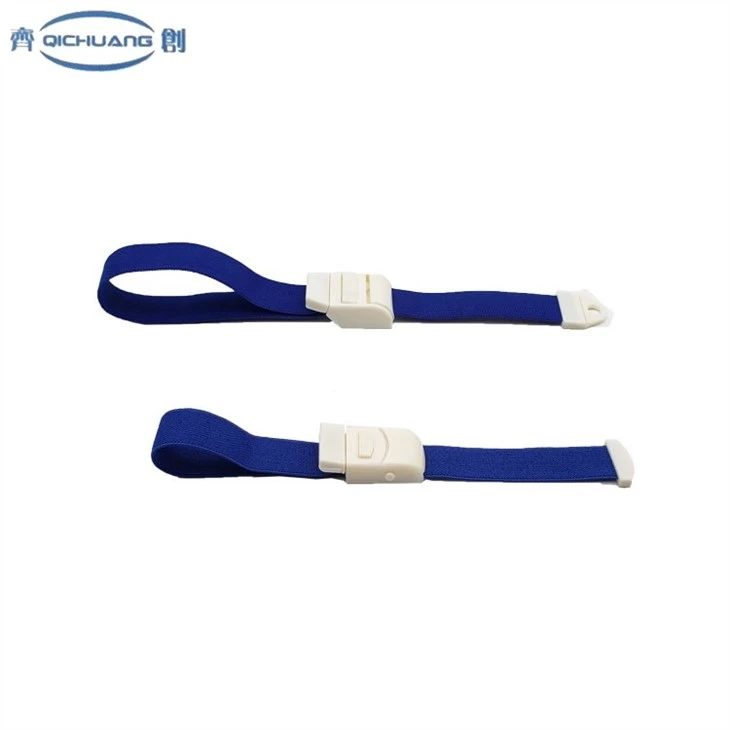
In some cases, people may also place the tourniquet over a joint. This is a significant error because tourniquets work by compressing blood vessels against the bone. When placed over a joint, the tourniquet cannot achieve proper compression, and blood may continue to flow. It's important to find a flat, bony area on the limb for optimal placement. Our Disposable Elastic Soft Orthopedic Emergency Tourniquet Buckle is designed to be easily adjustable and can be placed accurately on the appropriate part of the limb to stop bleeding effectively.
2. Inadequate Tightening
Another common mistake is not tightening the tourniquet enough. A tourniquet must be tightened to a degree that completely stops the arterial blood flow. If the tourniquet is too loose, it will only partially restrict blood flow, which can lead to a false sense of security. The continued blood flow can cause excessive blood loss over time, putting the patient's life at risk.
To ensure proper tightening, one should apply the tourniquet and then use a windlass or similar mechanism (if available) to gradually increase the pressure until the bleeding stops. The absence of a pulse distal to the tourniquet is a good indication that the blood flow has been effectively stopped. Our Disposable Medical Tourniquet For Medical Use has clear instructions on how to achieve the right level of tightness, and its design allows for easy adjustment to ensure adequate compression.
3. Over - Tightening
On the other hand, over - tightening the tourniquet is also a mistake. Excessive pressure can cause significant damage to the underlying tissues, nerves, and muscles. Prolonged over - tightening can lead to permanent nerve damage, muscle necrosis, and even limb amputation in severe cases.
When applying a tourniquet, it's important to find the right balance between stopping the bleeding and minimizing tissue damage. One should start with a moderate level of pressure and then gradually increase it as needed. Once the bleeding is under control, no further tightening is necessary. Our Single - Use Tourniquet New Design Disposable Snap Blood Stop Rubber Tourniquet has a design that helps prevent over - tightening while still providing effective blood control.
4. Leaving the Tourniquet on for Too Long
Leaving a tourniquet in place for an extended period is extremely dangerous. After about two hours, the lack of blood supply to the limb can cause irreversible damage to the tissues and nerves. In some emergency situations, it may be necessary to apply a tourniquet quickly and wait for professional medical help. However, as soon as possible, the tourniquet should be removed or loosened under the supervision of a medical professional.
It's important to mark the time when the tourniquet was applied. This information can be crucial for medical teams when they arrive on the scene. They can then make an informed decision about whether to leave the tourniquet in place or attempt to control the bleeding through other means.
5. Using Improper Materials as Tourniquets
In emergency situations, people may be tempted to use improvised materials as tourniquets. Items like belts, ropes, or even shoelaces are sometimes used. While these materials may seem like a quick fix, they often do not provide the same level of effectiveness and safety as a proper medical tourniquet.
Improvised tourniquets may not be wide enough, which can cause excessive pressure on a small area of the limb, leading to more tissue damage. They may also be difficult to tighten and adjust properly. It's always recommended to use a commercially available tourniquet, such as the ones we supply, which are designed specifically for this purpose and meet strict safety and quality standards.
6. Failing to Monitor the Patient
After applying a tourniquet, it's essential to continuously monitor the patient. The patient's vital signs, such as heart rate, blood pressure, and level of consciousness, should be closely observed. Any changes in these signs could indicate a problem, such as ongoing blood loss or a reaction to the tourniquet.
Additionally, the area around the tourniquet and the limb should be inspected for signs of swelling, discoloration, or pain. These could be signs of tissue damage or nerve injury. If any of these symptoms are observed, medical help should be sought immediately.

7. Not Documenting the Use of the Tourniquet
Documentation is often overlooked when using a tourniquet. It's important to record the time the tourniquet was applied, the location on the limb, and the reason for its use. This information is vital for the medical team that will eventually take over the patient's care.
Accurate documentation helps the medical professionals understand the patient's situation better and make appropriate treatment decisions. It also serves as a legal record in case of any complications or issues that may arise during the patient's treatment.
8. Lack of Training
Finally, a lack of proper training in tourniquet use is a widespread problem. Many people, including first - responders in some cases, may not have received adequate training on how to correctly apply and manage a tourniquet. This lack of training can lead to all of the above - mentioned mistakes.
We believe that proper training is essential for the safe and effective use of tourniquets. That's why, in addition to providing high - quality tourniquets, we also offer training resources and support to our customers. We encourage all users of our tourniquets to undergo training to ensure they can use our products correctly in emergency situations.
In conclusion, understanding and avoiding these common mistakes when using a tourniquet is of utmost importance. Our company is committed to providing high - quality tourniquets that are designed to be easy to use and effective in stopping bleeding. If you are interested in purchasing our tourniquets for your emergency medical supplies, we invite you to contact us for more information and to discuss your specific needs. We are dedicated to helping you ensure the safety and well - being of those in need.
References
- American College of Surgeons Committee on Trauma. Advanced Trauma Life Support (ATLS) Student Course Manual. Chicago, IL: American College of Surgeons; 2018 edition.
- National Association of Emergency Medical Technicians. Emergency Medical Technician: A Comprehensive Approach. Jones & Bartlett Learning; 2019 edition.