

Radial Artery Hemostat Device
Regularly remind the decompression function to ensure the smooth flow of blood.
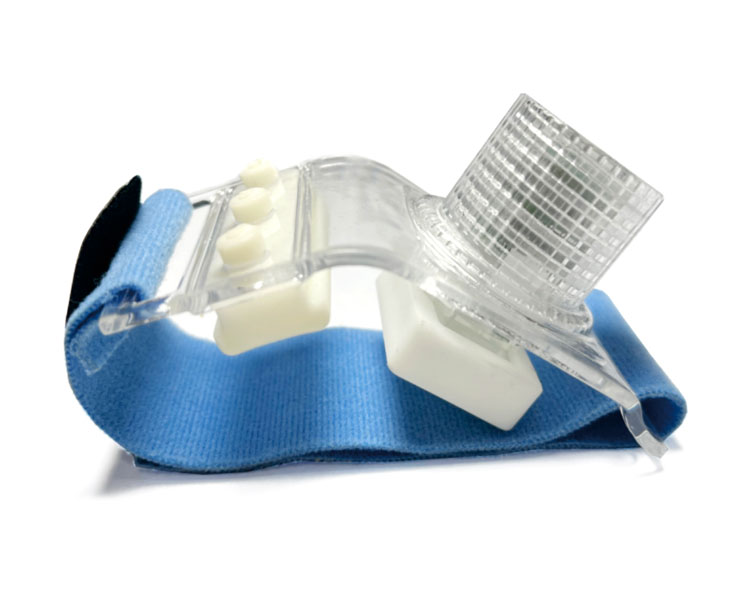
Smart rotary knob design for a precise fit and optimum comfort.
Transparent structure design, precise hemostasis operation, and convenient observation of hemostasis.
radial-artery-hemostat Features:
Easy to wear, more effective in hemostasis
Fully transparent design, easy to observe bleeding at the puncture point
Single-sided suspended stent design, can effectively avoid venous return obstruction.
Product Features
Timing function, voice reminder for pressurization every two hours.
TPU compression pads provide stable and even pressure on the surface.
The wrist strap is made of soft material, which is more comfortable to wear.
The support plate is made of transparent material, easy to monitor the puncture point of compression.
An arterial hemostat (or arterial hemostatic device) is a medical instrument designed to control bleeding from arteries by applying targeted pressure or using specialized mechanisms. Here's a concise overview:
Key Points:
- Purpose: Primarily used to stop arterial bleeding, especially after procedures like angiography, catheterization, or vascular surgeries, where precise hemostasis is critical to prevent excessive blood loss.
- Working Principle:
- Some devices use mechanical pressure (e.g., inflatable cuffs or compression pads) to apply direct force over the arterial puncture site.
- Others may combine pressure with absorbable materials or adhesives to promote clot formation.
- Advantages:
- Reduces manual compression time for healthcare providers.
- Minimizes patient discomfort and the risk of complications like hematoma or vessel damage.
- Common Types:
- Mechanical compression devices (e.g., compression bands, clamp-style hemostats).
- Biocompatible sealants or patches that adhere to the vessel wall.
Arterial hemostats play a vital role in both emergency care and post-procedural management, balancing effectiveness with patient safety.